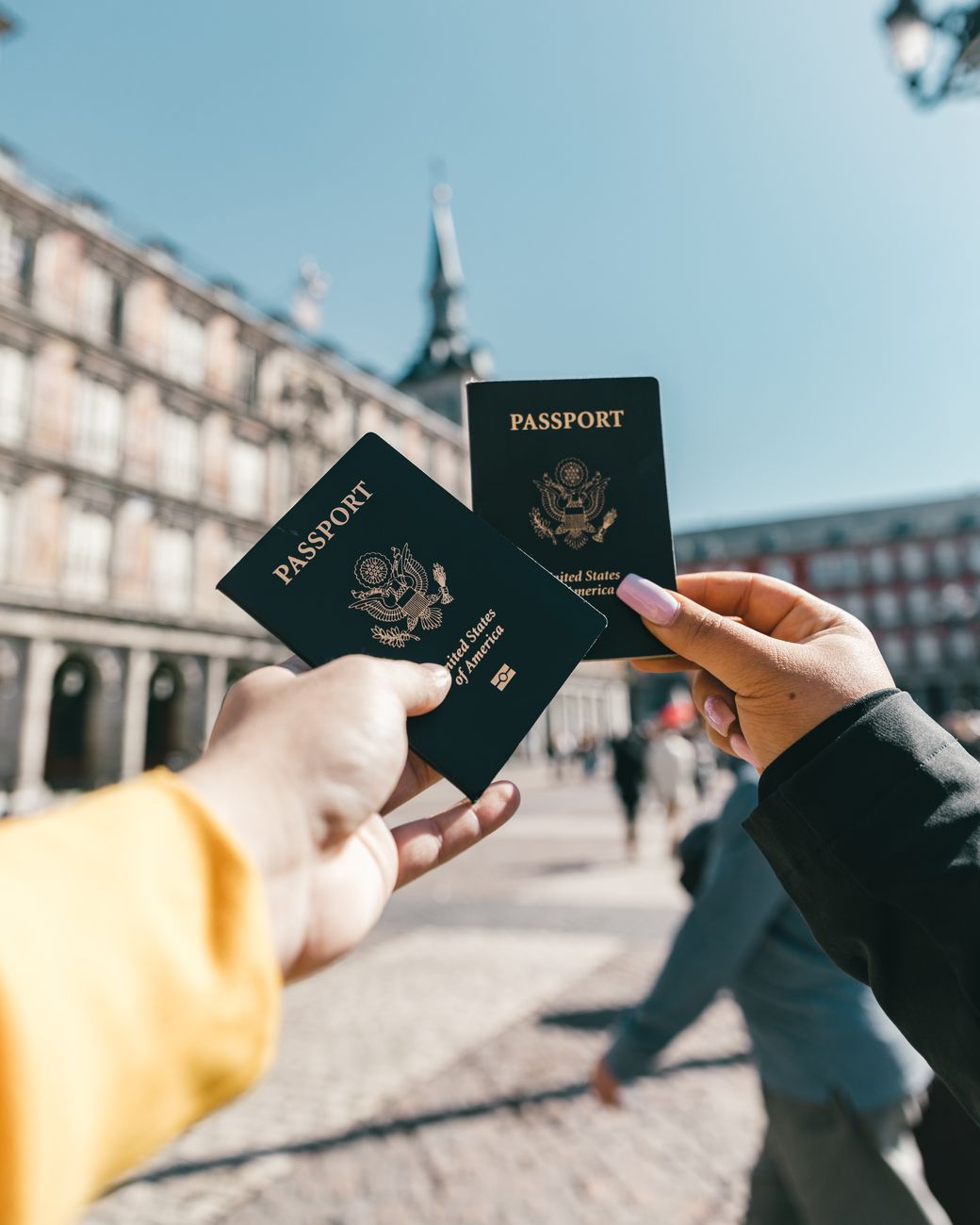
I want to clarify one thing specifically. I don’t have a denial letter for myself, specifically. As of this date, I have not made an application for a US passport since receiving my last US passport book and card on January 11th, 2017. However, I know full well that the policy of the United States government, along with the results of similarly situated persons, demonstrates that the United States government will either issue me a false passport inconsistent with my actual sex or deny me a passport at all. This is due to Trump’s own personal “gender ideology” that trans women are somehow “male”. This is the problem with electing a man who constantly needs cognitive tests to the highest office in the land.
So, why haven’t I applied?
The answer is quite simple and is threefold. Though, I do need to explain a bit more about each time period.
When the Canada Border Services Agency had my passport
Before Trump took office and signed the executive order that directed the State Department to start issuing false passports to trans people, my US passport was not in my possession. I was actively litigating a refugee claim requesting Canada’s protection. As a part of the process, I had to surrender any and all American identification I had. This included my Colorado ID card, my Global Entry card, and my US Passport book and card.
I would have tried to renew it before Trump actually took office if I had access to my US passports. I say this with certainty because I did this before Trump’s first term started. When I renewed my US passport in 2016, I received my US passport just days before the first Trump administration took power. From November 2019 to the day I complied with my departure order in May 2025, my US passport was not in my possession.
After CBSA returned my passport to me and injunctive relief was granted
In late April, the Federal Court informed me that my Application for Leave and for Judicial Review was denied. This was the effective end of my refugee claim. I exhausted the last of my appeals and had to leave Canada. I immediately started reaching out to CBSA to arrange for my departure from Canada. Eventually, after obtaining contradictory answers, I was able to reach out with a local contact with IRCC here in Whitehorse. He connected me with CBSA in Edmonton and we coordinated my voluntary departure from Canada. Well, as “voluntary” as it can be when you’ve spent the majority of the previous decade fighting to remain in Canada.
However, on May 23rd, 2025, I received my Confirmation of Departure from Canada as I boarded my one-way flight to Denver. On May 27th, 2025, I immediately applied for Permanent Resident status. On June 21st, 2025, I returned to Canada on a one way flight back to Edmonton on a visitor visa. No injunctive relief was available in the four days between my return to the United States and my application for a permanent resident visa.
When the Court ordered injunctive relief
When injunctive relief was possible, I was not able to avail myself of that relief for two reasons. The first is that I was not yet a part of the defined class. My passport had more than a year of validity from the date the District Court granted relief until that relief was overturned by SCOTUS. I was never included in the Orr class while the relief was available. The second reason was, even if I wanted to attempt while the injunction was in force, I needed a passport. I was in the process of applying for permanent resident status. From May 27th to December 16th, 2025, I could not part with my passport. Not until I received my Electronic Confirmation of Permanent Resident status.
Why can’t I apply now?
And now? Now, I have no injunctive relief to rely on. I am watching the Orr case move its way through the American court system. I am watching the State Department argue in open court that it should have the right to issue false passports to transgender people. Passports that are effectively useless, given how negatively immigration officials around the world view the usage of false passports. The latest Order from the District of Massachusetts is an order for discovery from the Orr plaintiffs. So, needless to say, this case is likely to drag on long past the day I finally become eligible to apply for Canadian citizenship.
Why can’t I use an inaccurate passport?
Because I know that immigration officials take a fairly dim view of people who present false documents to them. I freely admit that the legality of false passports actually issued by the national authority is untested. However, the chain of facts remain the same. I know full well I’m not male. I don’t believe that every employee of the State Department is unwell enough to believe any woman, whether trans or cis, is “male”. Therefore, there is at least one, if not more, point of intentional falsification of a US passport.
So, even having it is a crime under 18 USC § 1543. But using it is a separate crime. And even though I’d likely be acquitted due to the fact that my receipt and usage of it is wholly due to State action, this only resolves the liability under 18 USC § 1543. Entrapment by the US government is not a defence to criminal inadmissibility to Canada under s. 36 of the Immigration and Refugee Protection Act. Conviction is not a requirement for me to be found inadmissible under s. 36 of the Immigration and Refugee Protection Act. The act is enough to destroy the life I’ve built for myself in Canada.
I also tend to believe that when it comes to lying to the government, the dildo of consequences rarely arrives lubed.
So, what’s next?
The clock continues to tick down. Barring a miracle out of the District of Massachusetts, January 10th, 2027 is the last day that I have access to a legally usable, accurate US passport. Well, in theory. After all, IRCC has actual custody of my US passport while they’re processing my Certificate of Identity application. But after January 10th, 2027, I will, for all intents and purposes, be “effectively stateless” due to the hardships placed upon me by the US government. This is not just my opinion but the opinion of the UNHCR and the Supreme Court of Canada in Canada v. Ward. To quote the Court:
The inquiry as to whether a claimant meets the “Convention refugee” definition must focus on whether there is a “well‑founded fear”, which the claimant must first establish, and all that follows must be “by reason of” that fear. Two categories, both requiring the claimant to be outside his or her state of nationality by reason of that fear, exist. The first requires that the claimant be unable to avail him‑ or herself of that state’s protection. It originally related only to stateless persons, but can now include those refused passports or other protections by their state of nationality.
While I accept that this doesn’t cite either the Royal Prerogative or the Citizenship Act, it doesn’t need to. The fact that they recognize that the denial of a passport by a person’s state as a hardship is enough. If the Canadian government has chosen to mitigate those hardships by granting me a Certificate of Identity, I’ll consider this resolved. However, if they choose either to deny the Certificate of Identity application or fail to render a decision by that date, that’s a different story. I’ll look at other legal remedies available to me.
One thought on “The Real World Impact of Being Denied an Accurate, Legally Usable Passport”